Why Manufacturing Growth Is Still Based Upon Four Pillars
Article by Kevin Parkin
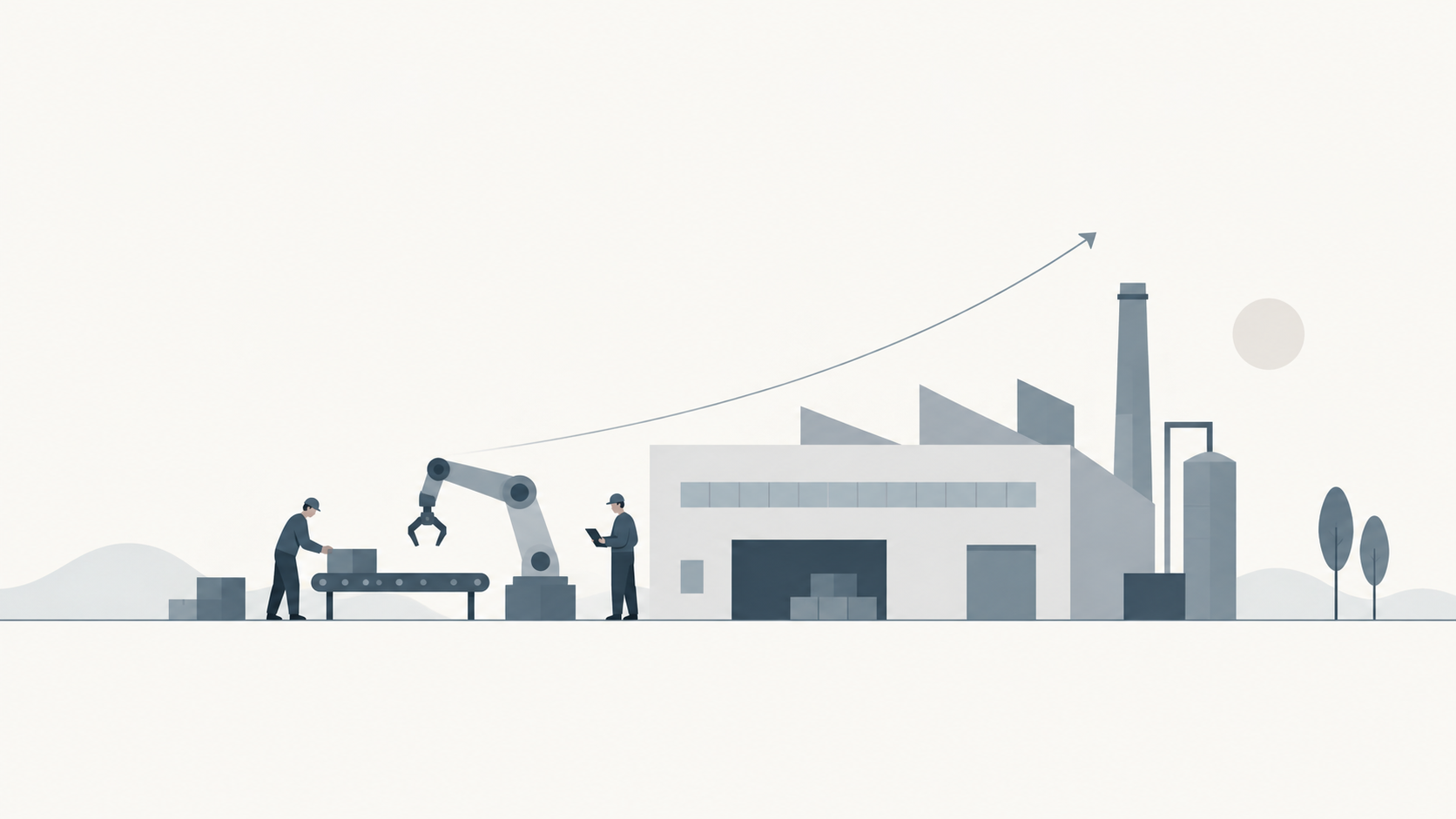
Many years ago, studying economics, I came across Jean-Baptiste Say’s framework for manufacturing: Land, Labour, Capital and Enterprise. Decades later, I remain convinced that little has changed in the fundamental ingredients of a thriving manufacturing sector.
There is no shortage of talk today about the forces disrupting manufacturing of which, competition, digital communication, and rapid innovation are reshaping the landscape and will continue to define its future. But disruption does not replace fundamentals. These four pillars still form the bedrock of sustainable growth in the sector and any serious strategy for manufacturing prosperity must begin from there.
Land
Availability, cost and access to local services via transport links, internet links and reliable power availability remain critical factors in establishing or retaining a manufacturing site. Planning decisions made by local authorities play an important role here too: the ability to expand on an existing site, or relocate to a better one, often hinges on decisions made far from the factory floor.
Labour
The dynamics of labour are more complex than simple availability. Skills shortages, cost pressures, and a perceived reluctance to work in certain industries ie defence or chemical manufacture are frequently cited examples which all shape a manufacturer’s ability to build a skilled workforce. Solving this challenge requires more than recruitment; it requires changing perceptions of the sector itself.
Capital
Capital takes many forms, but at its core it is either equity or loan finance, each carrying its own conditions and expectations. Access to adequate, affordable funding remains critical to growth but so does patience. We cannot expect sustainable growth from a system where every investment demands payback within two years, or where shareholders expect eye-watering returns every five. Long-term investment strategies, not short-term extraction, are what manufacturing needs to thrive.
Enterprise
Enterprise is the pillar that turns the other three into something more than potential. It covers calculated risk-taking, but just as importantly, it depends on surrounding a business with experienced, diverse, and complementary leaders — people who develop and commit to a shared growth strategy rather than simply managing what already exists. This matters as much for established businesses scaling up as it does for startups finding their feet.
Conclusion
So, both little and everything has changed. The pressures on manufacturing today including; global competition, technology, changing expectations of work, are real and demand a response. But the underlying pillars that decide whether a manufacturing business grows sustainably have not shifted. What has changed is the urgency of getting the policy environment right: we need a government willing to encourage start-ups, support growth, and remove the barriers still standing in the way of manufacturing prosperity.