The GWR Fast Charge Trial and World Record
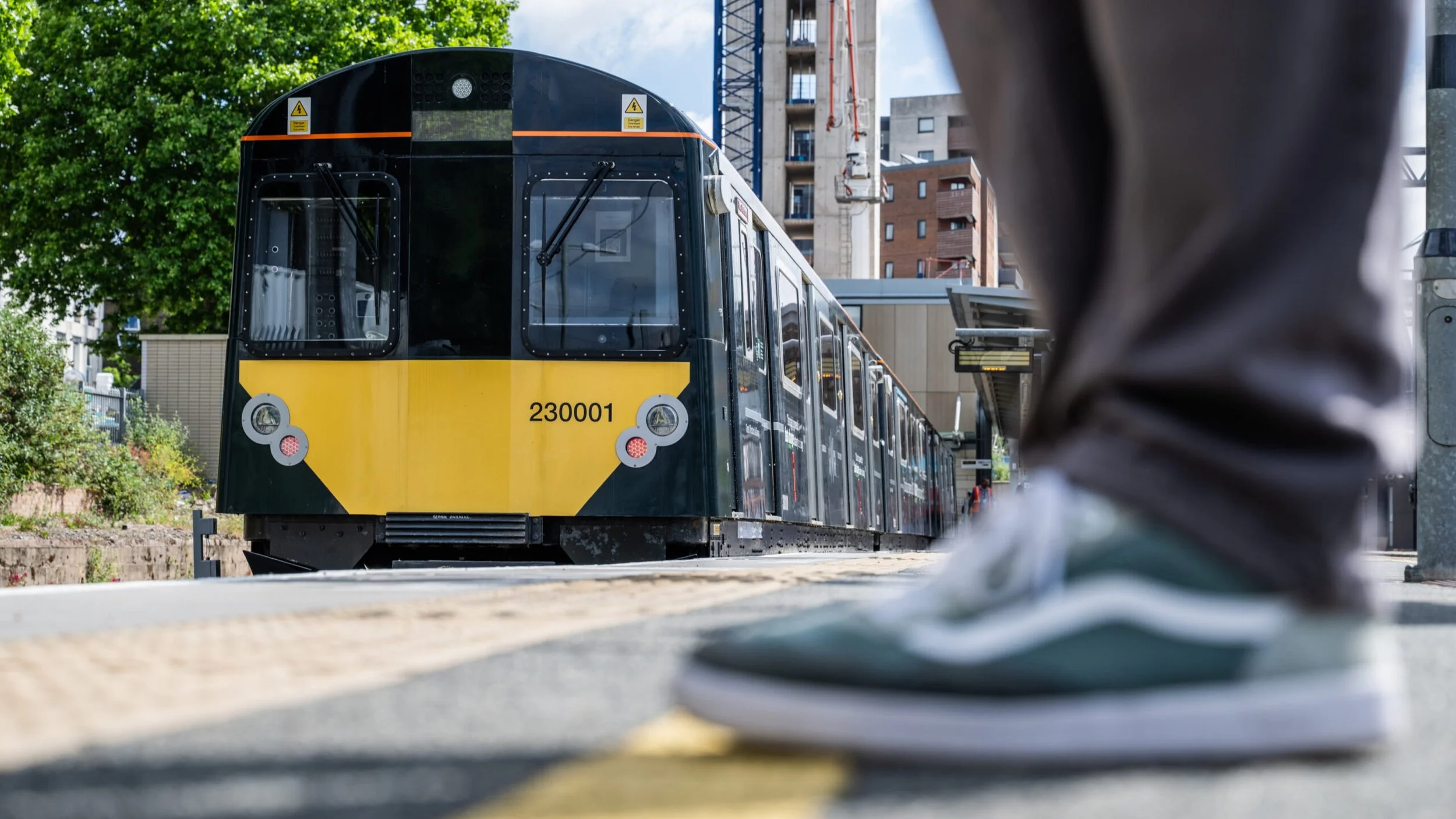
Great Western Railway to introduce record-breaking battery train into passenger service © Great Western Railway
Article written by by Julian Fletcher, Technology Development Manager, GWR Fast Charge Battery Train Trial
The Covid pandemic brought about change the world over. For me it presented a time to reflect on my career developing gas turbine engines with Rolls-Royce, and an opportunity to pursue something new: fast charging battery power on trains. This was in response to the declaration of a climate emergency, and a desire to make some changes personally.
My remit within this project was to engineer the connection between the train and the charging system. It needed to be automatic, safe, and capable of charging a battery train within 3 ½ minutes. I was heavily counselled to include “all the excellence of aerospace but none of the cost”. The result was a compact system that was simple, safe and cost-effective.
The kit was tested on an endurance rig, then fitted to the Class 230 battery train as part of the Great Western Railway Fast Charge Battery Train Trial in West Ealing. This was the focus for my next major piece of work: defining and delivering the test programme.
The purpose of this was primarily to show that the new charging system would operate safely in all extremes, and also to fully understand the energy use of the system.
In amongst the test programme was a suite of tests to examine different driving styles, and the results were startling: the “every day” range of around 50 miles could be increased significantly with a few simple measures, so the decision was taken to attempt to break the world record, which stood at 139 miles.
With a combination of human and artificial intelligence, the team worked out how to weave a world record attempt around existing scheduled trains on the railway. The remaining steps were to use a special driving technique and careful monitoring so that we could go the distance safely. The result was a new world record: over 200 miles on a single charge.
In a risk averse industry, it was important to demonstrate what could be done in the extreme cases. The world record provided this, along with ample engineering data.
The testing programme has also provided the opportunity to host visitors from every corner of the industry and other key stakeholders, and to openly share understanding of the technology. Serving as a mobile office, the battery train has provided a conducive environment for in depth discussions with senior delegates, covering topics such as operating costs, battery life and safety.
The team have provided a single source of information on the train, operation, and infrastructure. In many ways this is providing a vision of where Great British Railways wants the UK rail industry to be.
The same Fast Charging battery train has now started passenger carrying service, so the focus has moved on to the operating and whole life cost reduction, improved air quality, smooth quiet running and other benefits.
The trial has catalysed discussions about battery traction in UK Rail: the constant real-world experience, along with that of other battery trains, is enabling the industry to have confidence in battery power as an alternative to diesel, as it looks at how to replace the ageing fossil fuel powered fleets.